


· By Cullen Mo
What Is Konjac? The Japanese Root Behind the Jelly Chew
What Is Konjac?
Konjac is a plant — specifically, the corm, or swollen underground stem, of Amorphophallus konjac. It's grown in Japan's main konjac-producing regions, where the corm is ground into glucomannan, a type of fiber. When mixed with water, glucomannan forms a firm, springy jelly with a bite that's more like a gummy than gelatin.
You'll find konjac in all kinds of Japanese foods, from shirataki noodles and blocks of konnyaku to drinks and sweets. It's been part of Japanese cooking for generations. Pac Pac's chews start with that same konjac root, made in Nagoya and sweetened with beet sugar rather than the corn syrup and sugar alcohols commonly found in jelly candy.
Here's what konjac is, how it becomes jelly, and why it forms the base for a variety of foods, from noodles to snacks. If you're brand new to konjac, start with our farm-to-table story.
It's a Root Vegetable, Not Gelatin
 Konjac (KON-jack) has been a staple of East Asian cooking for centuries. Other names for it are konnyaku, elephant yam, or devil's tongue. The plant grows underground, and the bulb is used for food.
Farmers harvest the bulbs and grind them into a fine flour. With water, the flour transforms into a firm gel. That simple step is what gives konjac its texture — and why it works without gelatin. This texture is unique to konjac and makes it a substitute for gelatin, which is why it is a natural fit for vegan and gluten-free food.
Ours comes from the Japanese regions known for konjac. The farm-to-table story tells our whole journey.
Konjac Has Been Around a Long Time
Konjac reached Japan from China around the 6th century, first as a medicine and later as food. Buddhist monks, who couldn't cook with meat, relied on konjac for its substantial bite, and its ability to absorb flavor.
Over time it became konnyaku, firm blocks served in dishes like oden, and shirataki, the glassy low-calorie noodles. Today people have found many ways to use konjac, including sweet jelly snacks.
For the deeper dive into konjac's role in Japanese culture — ceremonies, folklore, and traditional dishes — see our history of konjac in Japanese society.
So Why Is Konjac So Chewy?
Glucomannan is the reason for konjac's chewy texture.
Glucomannan is a soluble fiber in the konjac root. It soaks up water and holds onto it, forming the firm, springy jelly that sets konjac apart from an ordinary gummy.
Imagine a firm jelly with mochi's bounciness. It doesn't dissolve but holds its shape as you bite into it, which creates a satisfying chew. The science of konjac's chew goes deeper on the gel itself.
What Makes Konjac Different?
The texture. Glucomannan soaks up water and gives konjac its signature springy, mochi-like bite. It keeps its chew from the first bite to the last, giving your snack a little more bounce and a little more to do.
One chew makes a snack-sized treat. The extra chewiness slows things down, while our tear-open sachets make the whole thing easy to grab when you want something fun between meals.
People come to konjac for that plant-based, playful texture — the kind of candy you can chew, stretch out, and enjoy for a minute.
For the nutrition side — calories, sugar, fiber, and the research behind glucomannan — see Is Konjac Candy Healthy?
The Many Forms of Konjac

Konjac can take on many forms of food. There are firmer konnyaku blocks for savory Japanese dishes, springy shirataki noodles for diets, and a plain flour used to thicken soups. Here's how to cook with konjac flour.
Pac Pac Snacks is the sweet variety. We make fruit-flavored konjac jelly in portable and convenient little tear-and-squeeze sachets.
How We Make It Snackable
We source konjac flour from Japanese growing regions, then incorporate high quality fruit ingredients and beet sugar rather than other konjac jellies, which use corn syrup or sugar alcohols. This mix goes into an individually wrapped sachet perfect for on-the-go: tear, squeeze, chew.
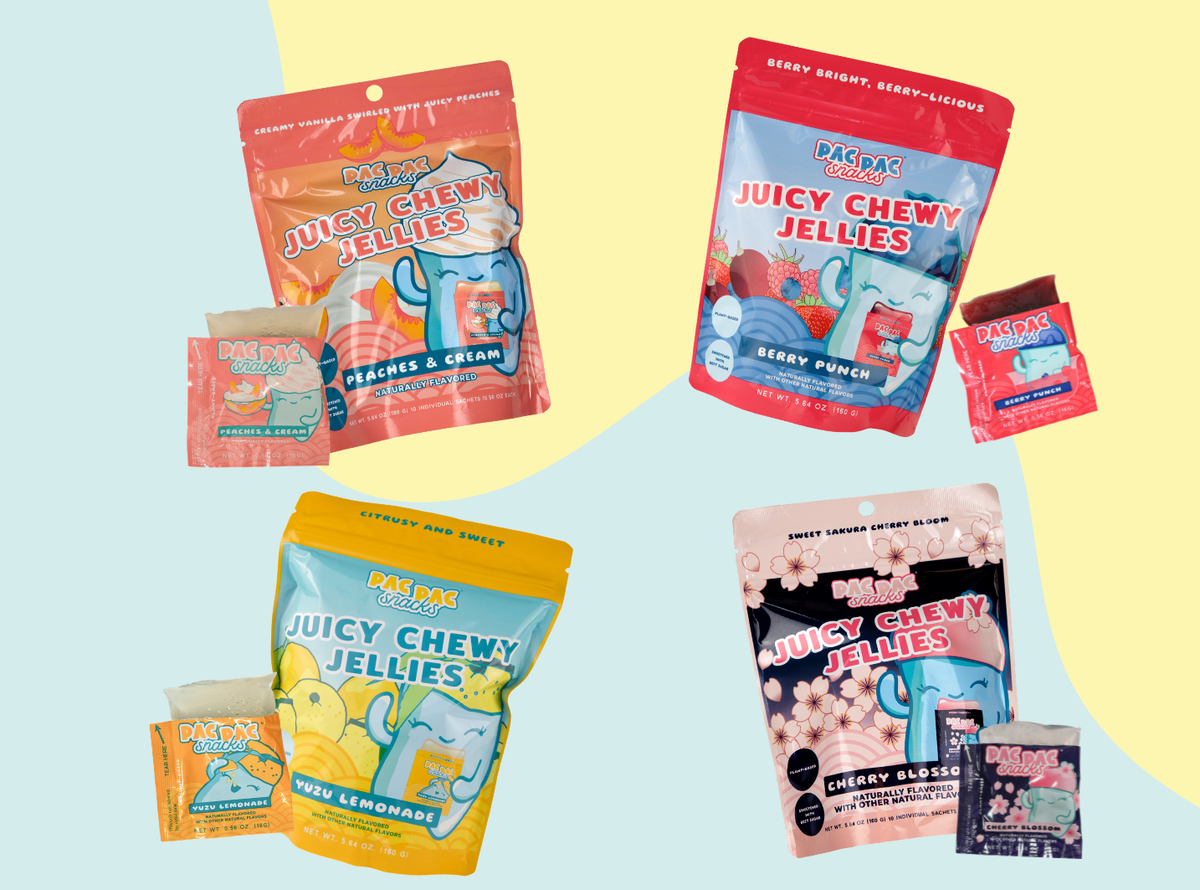
We formulated our konjac chews in globally-inspired flavors: Yuzu Lemonade, Berry Punch, Cherry Blossom, Peaches & Cream, Mango, and Matcha made with Japanese matcha powder. All of them are vegan and gluten-free, and they taste like the real fruit and real matcha, not artificial.
Shopping for konjac jelly and not sure what separates a good one from the rest? Our guide on how to choose the best konjac jelly covers what to check on the label: sweetener, flavor, format, and sourcing.
Wondering whether it's safe to eat, especially for kids? See our full breakdown: Is Konjac Jelly Safe?


